
The Industrial Court has ordered Century Bottling Company Limited, the bottler of Coca-Cola sodas in Uganda, to pay its former forklift operator a total of UGX 51,514,632 in legal wages and general damages at an interest rate of 8% per year, after the Court found that the company had unlawfully and unfairly fired the 18-year-long employee.
The employee, Mr Asuman Mulindwa, was fired by the company in April 2022 after accusing him of recklessly and negligently driving a forklift into a fellow employee, Bruno Mugarura, thereby injuring him.
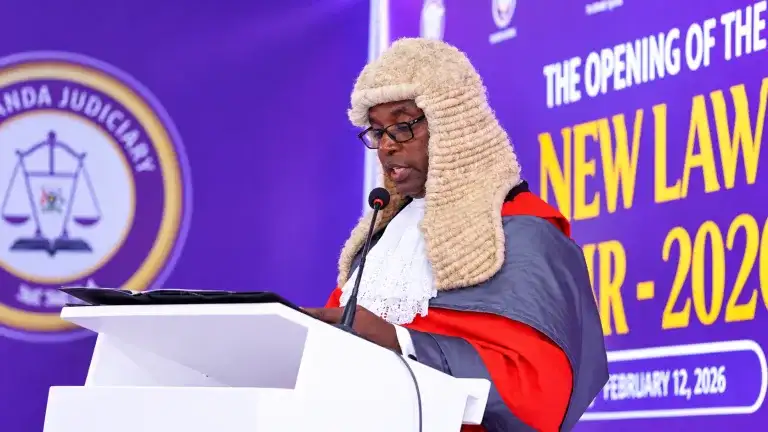
The Court, led by Justice Anthony Wabwire Musana and comprising three other members, found that whereas the company dismissed the employee after conducting investigations, notified him of the charges against him, allowed him time to prepare a response/defence to the charges and conducted a disciplinary hearing (procedural fairness), the Company had fired him on the basis of an unsigned human resource manual which had not been incorporated into his employment contract or thereafter brought to his attention by displaying it in a permanent or prominent place at the workstation.
The Court also found that the employee had not been allowed to defend himself before the disciplinary committee or ask the witnesses testifying against him questions, which made the outcome of the disciplinary hearing predetermined.
Taken together, the Court decided that these failures on the part of the company did not meet the requirement of a “clear rule book” under Rule 1(8) of Schedule 2 to the Employment Act and generally the rules of natural justice under Section 65 of the Employment Act.
“We hold that the Claimant’s dismissal was unfair and unlawful. Although the Respondent gave notice, the disciplinary Chairperson summarily found the Claimant guilty on preliminary investigations without allowing him to cross-examine adverse witnesses or present a defence, breaching natural justice. The Respondent therefore failed to establish a valid, verifiable reason for dismissal. The unsigned Human Resource Manual lacked evidentiary value, and no direct eyewitness evidence of the alleged negligence was adduced before this Court. Accordingly, the dismissal lacked substantive justification.” The Court decided.
Outcome
Upon the finding of unfair and unlawful dismissal, the Court awarded the employee monetary awards, broken down as follows:
- Severance Pay under Section 86 (a) of the Employment Act, having served the company for more than 6 months (18 years): UGX 37,135,674/= (thirty-seven million, one hundred thirty-five thousand six hundred seventy-four shillings) – calculated at the employee’s one month’s. In this case, the employee was earning UGX 2,063,493/= (Uganda Shillings Two Million Sixty-Three Thousand Four Hundred Ninety-Three).
- General Damages: UGX 10,315,465/= representing about 5 months’ pay.
- Three Months’ Termination Notice Pay (under Section 57(3) (d) of the Employment Act): UGX 2,063,493 as a balance, the company having paid him UGX 4,039,848/= already.
- Repatriation Allowance under Section 38 (3) of the Employment Act: UGX 2,000,000/=
Explanation: “The qualification here [under that Section] is the length of employment, not proof that the Claimant was resident in Isingiro (the place to be repatriated to)”
Takeaways
- Drafting of Disciplinary Charges does not require the precision of drafting a criminal charge. What matters is that the employee understands the charge and the punishment.
- Where the Labour Officer has not made a formal decision/award, then the claimant/employee is right to bring a reference before the Industrial Court because an appeal does not arise out of a vacuum. It arises from a formal decision of the Labour Officer.
- Be mindful of hearsay evidence: Witnesses before the Industrial Court must be witnesses who directly witnessed the events in question [the witnesses in the disciplinary proceedings] and not senior Human Resource managers.
- Depending on the structure of loan documents, an employer is not liable to pay an employee’s salary loan where the employer did not guarantee it.
- In employment disputes, Costs do not follow the event (of a successful litigation). They are the exception and will be granted only if the losing party is found to be culpable of misconduct, including pre-litigation misconduct.
“We are not persuaded that holding a hearing, even if it fails to find substantive justification for dismissal, constitutes pre-litigation misconduct for which the Respondent should be condemned in costs”
Legal Representation
Mr Jonan Nuwandinda Rwambuka of Rwambuka & Co. Advocates for the Claimant
Mr Emmanuel Wasswa and Mr Timothy Akampurira of AF Mpanga Advocates for the Respondent.

Benjamin is a Ugandan lawyer and legal eagle on commercial and corporate legal practice.